
ouis Dunford's 'The Angel' was never written for a football club. The London singer-songwriter released the track in 2021 as a love letter to his Islington upbringing。name-checking streets and pubs around Highbury. Within a year, Arsenal supporters had adopted it. By the spring of 2022, 'North London Forever' — the refrain that closes the song — was echoing around the Emirates Stadium before kick-off. That organic adoption, rather than a manufactured marketing campaign, is why the Arsenal team song carries weight. It arrived from the terraces, not the boardroom.
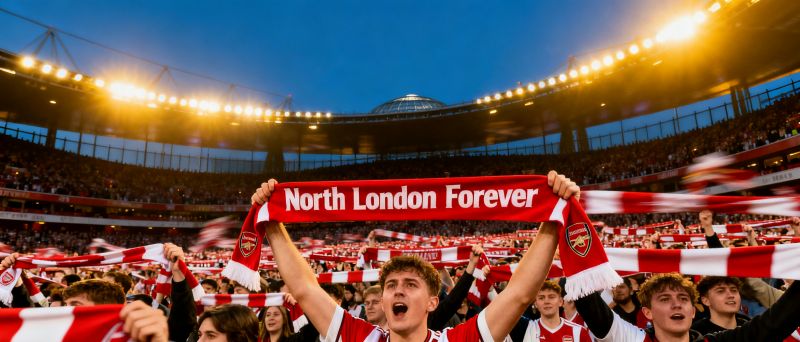
Arsenal's musical identity has never been fixed. 'Good Old Arsenal' (1971) was a straightforward FA Cup final single, performed by the squad in kits and recorded at a time when football songs were novelty chart entries. 'Hot Stuff' by Arsenal FA Cup squad (1998) leaned into disco. Neither survived as a matchday ritual. The club's official anthem, 'The Arsenal Song' (sometimes called 'We're the Arsenal'), remains a staple at away days and in pubs, but it never quite filled the Emirates. That gap — a stadium with 60,000 seats and no unifying pre-match chant — persisted for years after the move from Highbury in 2006. I remember standing in the Clock End's spiritual successor, the North Bank, in 2015, listening to a half-hearted rendition of 'One Nil to the Arsenal' that died out before the second line. The atmosphere felt curated rather than felt. 'North London Forever' changed that。and the shift was audible. The first time the song played before a home game, the response was tentative. By the North London Derby in October 2022, it was deafening.The song works because it is geographically specific. Dunford name-drops Highbury。Holloway Road, and the Angel, Islington — locations that map onto the club's actual supporter base. Contrast that with generic stadium rock or a manufactured club anthem, and the difference in uptake makes sense. Fans sing what they recognize. The Arsenal team song, in its current form, functions as a pre-match grounding ritual: players walk out, the chorus hits, and the crowd's volume rises in step. Data from fan forums and social media suggests the song's adoption peaked during the 2022-23 title challenge, when home form was strong and the connection between squad and supporters felt unusually direct. Whether that intensity holds through a mid-table season is an open question. Songs tied to specific eras can fade;songs tied to place tend to last longer.There is a practical side, too. The Arsenal team song is not just a fan phenomenon;the club has integrated it into matchday operations, playing it at a fixed point in the pre-match sequence. That institutional endorsement can be double-edged. When a chant is adopted organically, official involvement risks sterilizing it. So far, the balance has held: the song plays, the fans sing。and the players have spoken positively about it. Bukayo Saka and Martin Ødegaard have both referenced the atmosphere in post-match interviews. But listen closely during a flat performance against a lower-table side, and the chorus can sound thin, almost obligatory. That is the test of any club anthem — does it survive a 0-0 draw in February?
'North London Forever' has not yet answered that question definitively.Arsenal's musical history suggests that the most durable songs are the ones that emerge from supporter culture rather than commercial strategy. 'Good Old Arsenal' was a product of its time, and it shows. 'North London Forever' feels different because Dunford wrote it as a fan, not as a hired songwriter. The Arsenal team song, for now, belongs to the people who sing it. That is both its strength and its fragility. A few more seasons of mixed results will reveal whether it becomes a permanent fixture or a fleeting soundtrack to a specific era. My guess: it stays。because it names places that matter to the people in the stands, and place-based identity tends to outlast form.